



















Overview
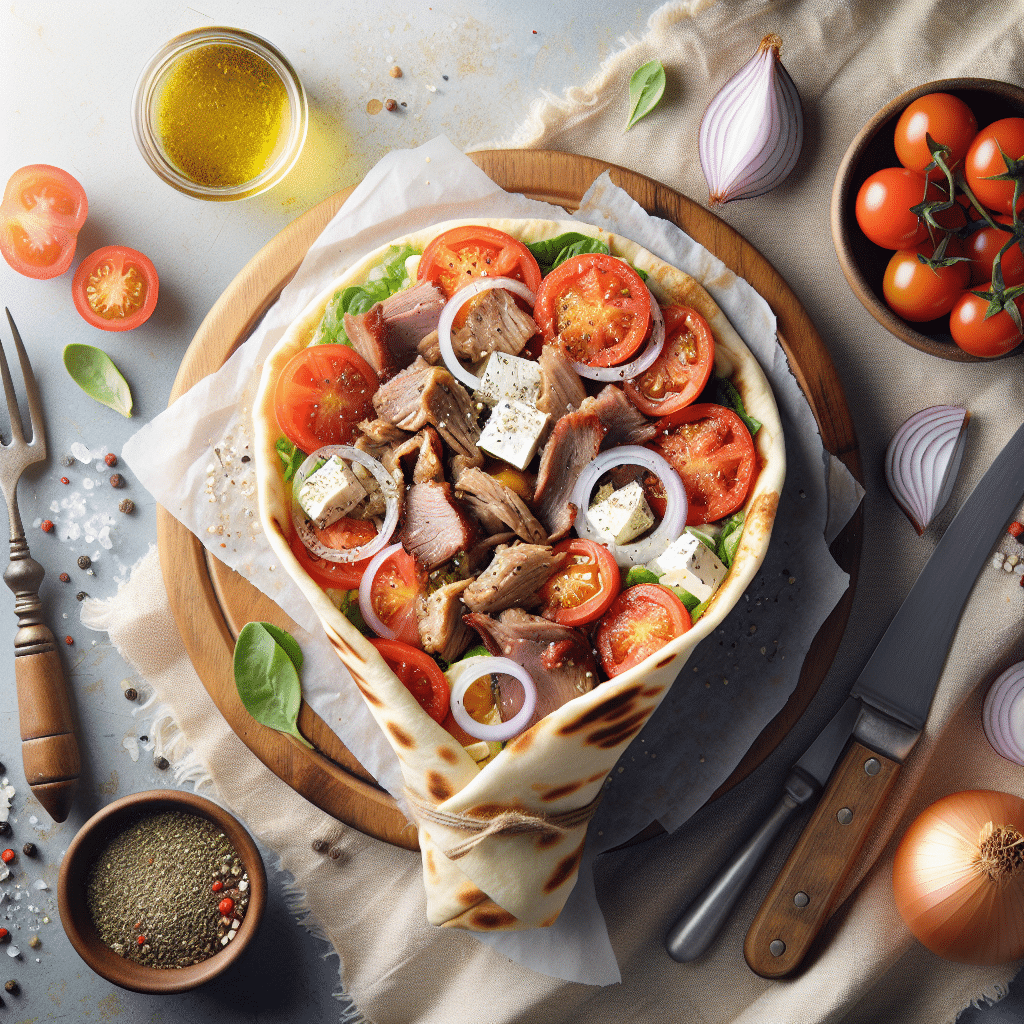
The Greek gyro is a popular street food that combines seasoned meat, typically cooked on a vertical rotisserie, served in a warm pita with fresh vegetables and tangy sauces. This dish is perfect for food enthusiasts, families, or anyone looking to explore authentic Greek flavors. With a prep time of about 30 minutes and a cook time of around 1.5 hours, the gyro is rated as moderately difficult due to the need for marinating and careful cooking. Originating from Hellenistic Greece, this dish has transcended its regional roots and can now be found worldwide.
The flavor profile of gyro is bold and aromatic, with hints of garlic, oregano, and lemon that bring a zestful kick to the savory meat. It suits various occasions—whether a quick weeknight dinner, a family meal, or festive gatherings such as Greek festivals.
Ingredients
- 500g (1 lb) boneless chicken thighs or pork (or 500g firm tofu for a vegetarian option)
- 2 tablespoons (30ml) extra-virgin olive oil
- 3 cloves garlic, minced
- 2 teaspoons dried oregano
- 1 teaspoon ground cumin
- 1 teaspoon paprika
- 2 tablespoons (30ml) lemon juice (about 1 lemon)
- Salt and pepper to taste
- 4 pita breads (or gluten-free alternatives)
- 1 cup (150g) tomatoes, diced
- 1 cup (150g) cucumber, sliced
- ½ cup (120g) red onion, thinly sliced
- ½ cup (120g) tzatziki sauce (traditional yogurt-based sauce)
- Fresh parsley for garnish
Step-by-Step Instructions
- Marinate the Meat: In a bowl, combine olive oil, minced garlic, oregano, cumin, paprika, lemon juice, salt, and pepper. Add the chicken or pork (or tofu) and marinate for at least 1 hour, ideally overnight in the fridge for more flavor.
- Cook the Meat: Preheat your grill or stovetop grill pan over medium-high heat. Remove the meat from the marinade, allowing excess to drip off. Sear each side until browned, about 5-7 minutes per side, cooking until the internal temperature reaches 75°C (165°F).
- Rest the Meat: Let the cooked meat rest for 5-10 minutes before slicing it into thin strips. This helps retain its juices and tenderness.
- Prepare the Pitas: Briefly warm the pita breads on the grill or in a skillet, about 1 minute per side, to make them pliable.
- Assemble the Gyros: Lay slices of meat on each pita, add diced tomatoes, cucumber, red onion, and generous spoonfuls of tzatziki sauce. Fold the pita over the fillings.
- Serve and Enjoy: Garnish with fresh parsley and serve with lemon wedges on the side. Enjoy your homemade Greek gyro!
Variations & Substitutions
- Vegan Option: Replace meat with marinated and grilled firm tofu or seitan.
- Gluten-Free: Use gluten-free pita or lettuce wraps instead of traditional pita.
- Flavor Variations: Consider adding sliced olives or a sprinkle of feta for a salty kick. For a spicy twist, incorporate harissa or chili flakes.
- Lighter Adaptation: Opt for grilled chicken breast instead of thighs for a leaner protein or use whole wheat pita for added fiber.
Make Ahead, Storage & Reheating
Many components of your gyro can be made ahead. Marinate the meat the night before and store it in the fridge. Pre-cut vegetables can also be refrigerated for easy assembly later. Cooked meat should be kept in an airtight container in the fridge, where it can stay fresh for about 3-4 days. For longer storage, freeze the cooked meat for up to 3 months.
To reheat, thaw if frozen, and gently warm the meat in a skillet over low heat, adding a splash of water or broth to prevent it from drying out. Warm the pita separately and assemble your gyros before serving.
Nutrition (Approx.)
Each serving (1 gyro) contains:
– Calories: 350
– Protein: 25g
– Carbohydrates: 40g
– Fat: 10g
– Fiber: 3g
These values may vary based on meat substitutions or added ingredients such as feta or extra sauce.
Serving Suggestions
Served with the gyro, consider pairing with:
- Greek Salad: A fresh mix of tomatoes, cucumbers, olives, and feta drizzled with olive oil is the perfect refreshing side.
- Roasted Vegetables: Seasonal vegetables roasted with olive oil and herbs create a vibrant and nutritious complement.
- Wine Pairing: Serve with a chilled Greek white wine, like Assyrtiko, for an authentic experience.
For kid-friendly options, deconstruct the gyro, allowing children to customize their toppings. Garnish with lemon wedges or chopped parsley for a colorful presentation.
FAQs
- Can I use a slow cooker for gyro meat? Yes, slow cooking is an effective method for tenderizing meat. Just adjust cooking times accordingly.
- Is gyro sauce always yogurt-based? Traditionally yes, but there are many variations, including tahini-based sauces for vegan options.
- Can I freeze leftover gyros? While it’s best to consume them fresh, you can freeze the meat and pita separately, and they will keep for up to 3 months.
- What’s the best way to slice the meat? Use a sharp knife and slice against the grain for the best texture.
- Can I marinate for longer than one day? Yes, but be cautious as the acid in the marinade can start to break down the proteins, making the meat mushy.
Conclusion
Mastering the art of Greek gyro not only brings a slice of authentic Greek culture to your kitchen but also provides endless opportunities to explore variations and personal twists on this beloved dish. Remember the key tips—marinate well, pay attention to cooking times, and enjoy the fresh ingredients that characterize Greek cuisine. Don’t hesitate to try different meats or vegetarian alternatives, and feel free to explore other Greek main courses once you’ve perfected your gyro!
We’d love to hear about your adventures in making gyros. Share your results or favorite variations with us!